Coach Bott’s Athlete Development Philosophy
I do not believe that more training automatically produces better athletes.
My responsibility is to help young athletes become stronger, faster, more robust and better prepared for the demands of their sport. Doing that well requires more than adding another workout to an already crowded schedule. It requires planning, progression, recovery and oversight of the athlete’s total physical training load.
For this reason, I do not operate as an “add-on” strength and conditioning service. Please read the following before you book any sessions with me.
I Must Be Responsible for the Athlete’s Strength & Conditioning
If I am going to prescribe an athlete’s strength, speed, power, plyometric and conditioning work, I need to be responsible for that process.
That means sport coaches should not simultaneously be prescribing additional strength and conditioning sessions, fitness workouts, running programs, plyometric sessions or other physical preparation without coordination with me. I have the same rule with physiotherapists.
This is not about controlling the sport coach’s technical or tactical practice.
Sport coaches should coach their sport. I take responsibility for the athlete’s physical preparation.
When multiple people independently prescribe physical training, nobody truly knows the athlete’s total workload. Training can be duplicated, high-intensity exposures can be poorly timed, and recovery can quickly become an afterthought.
I will not knowingly participate in that model.
One Complete Rest Day Every Week
Every athlete I work with must have at least one complete rest day each week.
A rest day means rest—not another practice, private lesson, conditioning session, gym workout, skills session or “light” team activity.
Recovery is part of training.
Young athletes are adapting not only to sport and training, but also to school, growth, maturation, sleep demands and the normal stresses of adolescence.
I want athletes who can train hard because their schedules also allow them to recover.
Seven days of organized training every week is not a model I support.
Multi-Sport Does Not Mean Everything at Once
I strongly support young athletes participating in multiple sports throughout their development.
However, being a multi-sport athlete is not the same as simultaneously competing in multiple demanding sport programs.
I will not provide strength and conditioning for athletes who are concurrently competing in two different sports or playing on two competitive teams when those commitments create overlapping training, practice and competition schedules.
An athlete can be a multi-sport athlete without trying to be a full-time competitive athlete in two sports at the same time. Multi-sport is ideal development when each sport has a season.
I prefer athletes to have clearly defined competitive seasons, appropriate transitions between sports, and periods during the year when physical development can actually occur.
I Am Building Athletes, Not Filling Calendars
My goal is not to determine how much training a young athlete can tolerate.
My goal is to determine the appropriate training stimulus, delivered at the appropriate time, followed by enough recovery to adapt to it.
Sometimes that means doing more.
It also means having the professional confidence to say no when an athlete’s schedule is already full.
If a family’s priority is maximizing the number of teams, practices, private sessions, tournaments and training opportunities an athlete can attend, Coach Bott may not be the right fit.
If the priority is long-term athletic development, quality training, appropriate recovery and sustainable performance, then we are likely very well aligned.
The Coach Bott Standard
Before I work with an athlete, I expect:
To have oversight of the athlete’s strength and conditioning, with sport coaches not independently adding S&C work.
A minimum of one complete rest day every seven days.
No simultaneous participation on two competitive teams or in two concurrent competitive sports when those commitments create overlapping training and competition demands.
Open communication about the athlete’s complete weekly practice, competition and training schedule.
A commitment from the athlete and family to prioritize long-term development over simply accumulating more training.
These standards are not intended to restrict athletes.
They exist because good coaching requires knowing when to load, when to progress and when to recover.
I would rather decline to work with an athlete than knowingly contribute to a training schedule that I do not believe represents responsible, evidence-informed, long-term athlete development.
— Coach Bott
Mission:
To develop resilient, adaptable, and high-performing athletes through a holistic, evidence-informed approach that blends science with the art of coaching. My role is to educate, guide, and challenge athletes to move better, think critically, and train with purpose.
Core Principles:
Movement Competency First
Athletes earn the right to load. I prioritize fundamental movement literacy and mechanical efficiency as the foundation for long-term development. Athleticism is built from the ground up, beginning with control, progressing to capacity, and culminating in expression.
Train the Human First, Then the Athlete
Strength and conditioning is not just about numbers. It's about relationships, trust, and the environment in which growth occurs. I invest in creating a culture of mutual respect, open communication, and psychological safety where athletes feel seen, heard, and supported.
Context Over Templates
There is no 'one-size-fits-all.' I use principles—not protocols—to guide programming. Every athlete’s developmental stage, injury history, sport demands, and personal background are considered in program design. I tailor strategies that fit the athlete, not force the athlete to fit a system.
Build Strength with Intelligence and Intent
Maximal strength is a cornerstone of physical preparation, but it must serve the athlete's goals. I develop strength that transfers—through force-velocity profiling, movement-specific loading strategies, and progressive overload that respects readiness and recovery.
Speed and Power Are Trainable Skills
Explosiveness is a trainable quality. I emphasize plyometrics, sprint mechanics, and force application strategies that develop dynamic, reactive athletes. Acceleration, deceleration, and change of direction are taught with clarity and deliberate progressions.
Sport Science Serves Coaching, Not the Other Way Around
I use data to inform—not dictate—decisions. Technology, force plates, and monitoring tools are powerful when contextualized by the coach’s eye, experience, and dialogue with the athlete. I translate complex data into simple action.
Long-Term Development over Short-Term Gains
I play the long game. I prepare athletes not just for the next season, but for the next level—whether that’s university, pro sport, or life beyond competition. I emphasize training age, consistency, and injury prevention over 'quick fix' metrics.
Professional Mantra:
"Culture trumps science if the culture is right. But the best results come when culture and science meet—on the field, in the weight room, and in the minds of committed coaches and athletes."
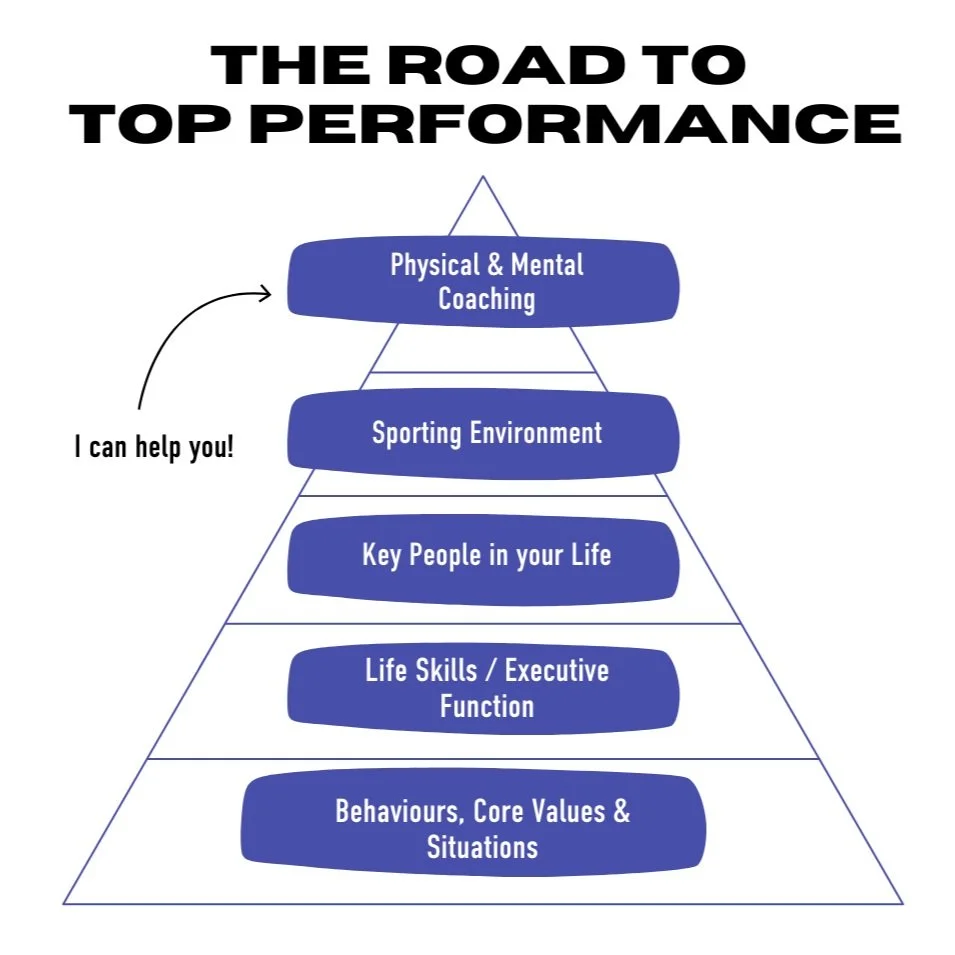
As a “Strength & Conditioning Specialist (CSCS)” I can assist in the following areas:
Movement screening - evaluation of general athleticism and movement skills.
High performance exercise prescription centered around speed development and injury prevention.
On-field/court speed & plyometrics coaching.
Exercise-based rehabilitation (ACL).
Mental skills coaching.
Teaching load management to parents of youth athletes.
Performance testing and athlete profiling.
What is Mental Performance Coaching?
The mind needs coaching just as much (if not more) than the body does. This is where Coach Bott’s unique skill set comes in. She has completed graduate work in Sport Psychology and well as the Unbeatable Mind Program that allows her to offer mental performance coaching to her clients of all ages and levels.